As we approach the holiest month of the Islamic calendar, there is a lot to look forward to in the coming weeks. This includes the Day of Arafah, as this is incredibly relevant to the Qurbani rituals that take place during this auspicious month. Read on to discover more about the importance of the Day of Arafah.
What is Dhul Hijjah In Islam?
Dhul Hijjah is the final and most sacred month of the Islamic calendar, and this is especially true of the first 10 days of Dhul Hijjah. During these initial 10 days, Dhul Hijjah fasting is common, as is increased prayer and Qurbani donations. This is because it’s believed that the rewards that are attained during this time are multiplied.
When is Dhul Hijjah 2027?
Since the Islamic calendar follows the lunar year, the time of Dhul Hijjah will vary from year to year in the Gregorian calendar. This year, Dhul Hijjah is set to fall on Friday, 7 May and end on 5 June; however, this is dependent on the sighting of the moon and is subject to change.
When is the Day of Arafah 2027?
This year the 9th of Dhul Hijjah is set to fall on 16th May. Once again, this is subject to the sighting of the moon, meaning that the date could shift slightly depending on the moon sighting.
What Day of Dhul Hijjah is Eid?
After the Day of Arafah, Eid al-Adha will follow. The first day of Eid al-Adha falls on the 10th of Dhul Hijjah, meaning that it will likely begin on 17 May 2027.
Mount Arafat
Mount Arafat itself sits just 20 kilometres outside of Mecca and reaches around 70 metres above sea level. As a result, this is the tallest point in the centre of the plain of Arafah. This height has only contributed to the mountain’s significance; Mount Arafat has overseen all manner of events and has even been the site of various significant happenings. Muslims can reflect on this when they think about or visit the mountain – how many other Muslims over the centuries have looked across to Mount Arafat, and what number of historic events have happened on or around it?
What Happened at Mount Arafat?
The Day of Arafah commemorates the Prophet Ibrahim’s (AS) ultimate sacrifice. Upon being asked to sacrifice his son, Ismail (AS), by Allah (SWT), Ibrahim took him to the top of Mount Arafat. As Ibrahim (AS) prepared to sacrifice his son, and Ismail (AS) prepared to give up his life, both in obedience and trust in God, Allah (SWT) declared that Ismail (AS) had fulfilled his task. Allah (SWT) provided a white horned ram at Ibrahim’s side, which was sacrificed in his son’s place.
Therefore, the Day of Arafah is incredibly significant, as it was during this day that Ibrahim (AS) was willing to give up the most precious thing in his life in the name of Allah (SWT). Allah (SWT) was able to see that there was nothing that Ibrahim (AS) wouldn’t do for him. This is how every Muslim should endeavour to lead their lives. Because of Ibrahim and Ismail’s steadfast obedience and faith, they were spared from the sacrifice. Mount Arafat’s name translates as ‘The Mountain of Mercy’ because of this event.
The ultimate sacrifice isn’t the only event to have taken place atop Mount Arafat, and it’s actually an extremely important location in the Qur’an. For example, Allah (SWT) is said to have forgiven Adam’s (AS) first sin that caused his fall from heaven on Mount Arafat. Furthermore, Adam (AS) and Hawa reunited here after they were each expelled from heaven, which influences the idea of praying for a marital life partner atop the mountain.
Similarly, Mount Arafat is believed to be the location of the Prophet Muhammad’s (SAW) farewell sermon to those who joined him on the pilgrimage. It’s for each of these reasons that Mount Arafat is an area of such lofty significance within the Qur’an.
What Happens on the Day of Arafah?
Because of the significance of Mount Arafat, it an important and sacred place for Muslims. Visiting Mount Arafat is an important part of the Hajj – the pilgrimage to Mecca and the nearby holy sites of Islam that is required of all capable Muslims once in their lifetime. The Hajj takes place during the month of Dhul Hijjah (the month’s name is ‘Month of the Hajj’) and the 9th of Dhul Hijjah – the Day of Arafah – is the second day of the Hajj.
On this day, pilgrims will travel to Arafat before noon and carry out ‘wuquf’ – a vigil and contemplation of Allah (SWT) – until sunset. They will offer supplications and reflect on and seek forgiveness for their past sins. They are seeking mercy from Allah (SWT) at the scene of one of His greatest acts of mercy. Wuquf includes remaining at Arafat during Zuhr and Asr (noon and afternoon prayers) The day ends with a sermon, delivered on the location where Muhammad (PBUH) gave his last sermon.
Donate Your Qurbani this Day of Arafah
As previously mentioned, the first 10 days of Dhul Hijjah bring many rewards, meaning that the Day of Arafah is one of the last opportunities to multiply your reward of giving Qurbani.
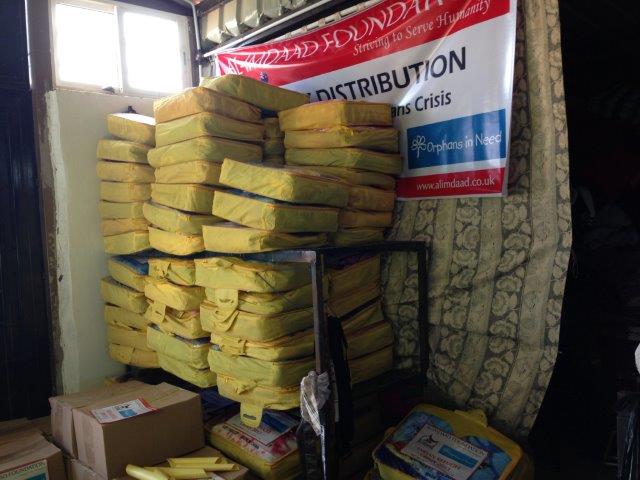
In order to ensure your donation reaches us ahead of the Qurbani sacrifices taking place, you can make your donation to Orphans in Need during Dhul Hijjah. We will ensure that your donation pays for an animal to be sacrificed in an Islamic country by word of the Qur’an and guarantee that it’s distributed to those in need. Donate your Qurbani to Orphans in Need this Day of Arafah.