Eid al-Adha is observed every year on the 10th of Dhul Hijjah, and while most people associate it with Hajj and Qurbani, its background runs much deeper than that. The Eid al-Adha history is not tied to a single moment. It is something that has been carried forward, generation after generation, without losing its real meaning.
It brings together prayer, sacrifice and giving in a clear and defined way. Each has its place, and they are meant to be carried out together. That is what gives Eid al-Adha its meaning and importance. Even though Muslims around the world celebrate this day differently across time and place, the celebrations have remained consistent.
The Origin of Eid al-Adha
The entire foundation of Eid al-Adha comes from the life of Prophet Ibrahim (AS). His life is often referenced when it comes to obedience to Allah, but this particular event is what shows this most clearly.
He was instructed in his dream to sacrifice his son, Ismail (AS). The command was very clear and left no room for interpretation. What matters here is how it was handled because there was no visible hesitation, no attempt to delay it. Both father and son accepted what was required. That short conversation captures the meaning of real submission, which is placing your duty to Allah above even the strongest ties of family and love.
The event took place in the area of Mina, near Makkah, where the test reached its peak intensity. Scholars have always pointed out that this was never a punishment. Instead, it served as a deep confirmation of faith. That is the most important part people tend to overlook. The Eid al-Adha story is not just about what happened, but how it was approached.
At the point where the sacrifice was about to take place, Ismail (AS) was replaced with a ram. The Quran states:
“We called out to him: ‘O Ibrahim! You have indeed fulfilled the vision.’ Thus indeed do We reward the good-doers.”
Surah As-Saffat (104-105)
That moment is key to the history of Qurbani, where the focus should never be on the sacrifice itself, but on whether the command would be followed.
Establishment of Eid al-Adha in Islamic Practice
The story of Qurbani originates from Prophet Ibrahim (AS), but Eid al-Adha was established as a defined religious practice during the time of Prophet Muhammad (SAW). After the migration from Makkah to Madinah (Hijrah), the Muslim community began setting clear practices for worship. During this period, two Islamic festivals were introduced, such as Eid al-Fitr and Eid al-Adha, replacing the cultural celebration days that were already observed by people in Madinah.
From that point, the main practices of Eid al-Adha were clearly set. These included the congregational Eid prayer, the khutbah delivered after the prayer, and the performance of Qurbani within the specific days of Dhul Hijjah.
From the earliest days, scholars in all the main schools of Islamic law have agreed that local moon sighting should decide the exact date, staying true to the original practice. These practices are now followed consistently, which is why the structure of Eid al-Adha has remained the same across different regions and periods.
The History of Qurbani
The history of qurbani is often explained in simple terms, but in reality, it is quite specific. It has a fixed timeframe, after the Eid prayer until the 13th of Dhul Hijjah. Outside of that, it doesn’t count.
Some conditions cannot be ignored. The animal must meet certain standards, and the method of slaughter must be correct. These are not minor details, and they clearly determine whether the act is valid. The Qur’an makes the purpose of Qurbani very clear:
“It is neither their meat nor their blood that reaches Allah, but it is your piety that reaches Him.”
Surah Al-Hajj (22:37)
This leaves little room for misinterpretation. Qurbani is not just about carrying out the sacrifice, but it’s also about the way in which it’s performed and what the true intention behind it is.
Connection Between Eid al-Adha and Hajj
Eid al-Adha and Hajj take place in the same period of Dhul Hijjah, but they serve different purposes and are not dependent on each other. Eid al-Adha falls on the 10th of Dhul Hijjah, immediately after the Day of Arafah, which is the most important day of Hajj. While pilgrims are completing their Hajj in Makkah, Muslims around the world observe Eid through prayer and Qurbani.
Hajj is an obligation only for those who are physically and financially able to perform it, and it involves specific rituals carried out in designated locations such as Mina, Arafah, and the Kaaba. However, Eid al-Adha is observed globally and does not require participation in Hajj. Its main practices, such as Eid prayer and Qurbani, are performed wherever Muslims are.
The connection between the two is in their shared origin in the life of Prophet Ibrahim (AS). Many steps of Hajj, including the sacrifice performed by pilgrims, trace back to events involving Prophet Ibrahim (AS) and his family. Eid al-Adha also centres on that same event, particularly the command to sacrifice his son. Because both Hajj and Eid al-Adha come from the same historical background, they occur at the same time each year, but they remain separate acts of worship with different requirements and practices.
Qurbani and Its Social Impact
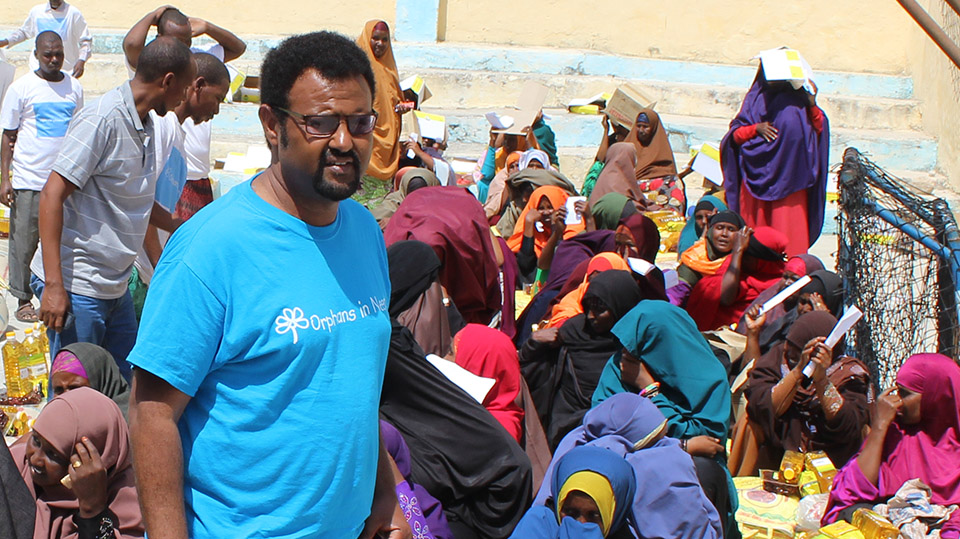
The history of Qurbani also includes a clear system of distribution. The meat is not meant to stay within one household. It is divided so that others, especially those in need, benefit from it. Qurbani is done in a way that goes beyond the individual and includes the rest of the ummah.
In practice, this part is sometimes treated casually. The sacrifice is completed, but the distribution is not given the same attention, which ends up weakening the purpose.
The Practice of Qurbani
Qurbani (also called Udhiyah) means that eligible Muslims sacrifice a permitted animal, usually a sheep, goat, cow or camel, across three set days. The act begins after the Eid prayer and must finish before sunset on the 13th of Dhul Hijjah. Scholars generally view it as required for anyone who holds wealth above the nisab level, though they strongly encourage it for others, too.
One sheep or goat equals one full share, while a larger animal, such as a cow or camel, can be divided among up to seven people. The whole procedure follows the pattern set by the Prophets. It demonstrates willingness to give up something valuable for Allah’s sake, without any belief that the sacrifice itself removes sins.
Significance of Qurbani in Muslim Life
The lessons from the history of Qurbani still speak plainly to the decisions people face in daily life. It invites straightforward self-examination about the things we cling to too tightly and how we can place obedience to Allah ahead of everything else.
What has changed is how far the impact can reach. Qurbani is no longer limited to immediate communities. It can now be carried out in places where the need is much greater.
The Eid al Adha history is something that’s carried on through practice. From the actions of Prophet Ibrahim (AS) to what is carried out today, the connection to Allah and the strengthening of faith are still ongoing. The story of Qurbani is very simple, but it depends entirely on how it is carried out. Without proper execution, it loses its purpose.
At Orphans In Need, we approach Qurbani with that responsibility in mind. We make sure it is carried out correctly and reaches people who genuinely need it.
This Eid ul-Adha, approach Qurbani with intent, rather than routine. Donate now through us and make sure your sacrifice reaches beyond your immediate circle to those who rely on it most.